
If there is one thing I learned from reading Harper Lee's latest novel Go Set a Watchman and then rereading To Kill a Mockingbird it is that high schoolers are in no way equipped to grasp the literary genius that is Harper Lee. She is humorous and heartwarming in her writing, while simultaneously making subtle yet gigantic statements about society and human nature.
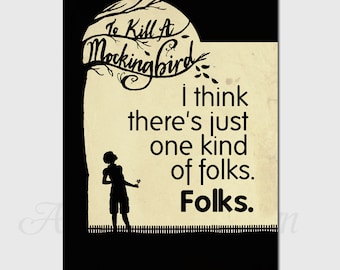
I didn't get any of that when I read this book in high school. I remember Boo Radley, because I was certain (and hopeful) that it would end up being a scary story. But Boo serves an entirely different purpose in the plot beyond myth and mystique. He is yet another example in Harper Lee's literature that all human beings no matter their race, color, appearance, or eccentricity are simply that: human beings deserving of respect. Although she never says it outright in the book, it is woven into the fabric of the book like it was there before she even started writing it.

On that note, one of my best friends told me that she was too afraid to read Go Set a Watchman because To Kill a Mockingbird is her absolute favorite book of all time. She had heard that Watchman makes you hate Atticus. I will say that there is a moment in the book when my exact reaction was "Ummm... are you freaking kidding me??" and you will know exactly what part I'm referring to when you get there but you MUST KEEP READING! And while doing so remember this epic quote from Atticus' closing argument in To Kill a Mockingbird:
"Thomas Jefferson once said that all men are created equal... We know that all men are not created equal in the sense some people would have us believe- some people are smarter than others, some people have more opportunity because they're born with it, some men make more money than others, some ladies make better cakes than others, some people are born gifted beyond the normal scope of most men.
But there is one way in this country in which all men are created equal- there is one human institution that makes a pauper the equal of a Rockefeller, the stupid man the equal of an Einstein, and the ignorant man the equal of any college president. And that institution, gentlemen, is the court."I swear it gives me chills. I reread it over and over and over and it still brought tears to my eyes every time. I'm truly a lawyer's daughter I guess. And that lawyer father stated it best when he told me that, more than being books about a trial, or race relations, or the South in the turn of the century, To Kill a Mockingbird and Go Set a Watchmen are about one thing: a young girl (and later woman) growing up and figuring out who she is.

If you have not yet read Go Set a Watchman you should put down whatever you are doing right now and go buy it. And then reread To Kill a Mockingbird. I haven't started another book yet because I can't bring myself too. Like I've said before, it's one of those books that when you're done you just can't let go yet because you become so attached to the characters and the story that you aren't ready to meet a new set of them yet. I may just have to reread it again..

Wow! Great review! You and I agree 100% about something! My impression from my high school reading of To Kill a Mockingbird was that it was about Atticus Finch, the legal system, and the horrible Jim Crow social/legal system in the south. But after reading both To Kill a Mockingbird and Go Set a Watchmen last month I realized like you that it was about Scout. About Scout growing up and discovering her own identity - separate from the identity of her beloved and iconic father. You Pop
ReplyDelete