Sunday, August 24, 2014

The Fault in Our Stars

John Green

You know those books that, when you finish reading them it takes you awhile to start reading a new book because you become so involved in the characters and the story that you can't bring yourself to meet new characters or discover a new story?  I knew from the first chapter that this would be one of those books.

Hazel Grace Lancaster is a 16-year-old girl who had previously been diagnosed with Thyroid cancer.  That cancer metastasized into small tumors in her lungs which force her to be on an oxygen tank all the time, which she cleverly names Philip, "Because it just looks like a Philip."  Augustus Waters is 17-year-old boy who struggled briefly with osteosarcoma which took one of his legs from him, but at the time of the book is a healthy young boy.
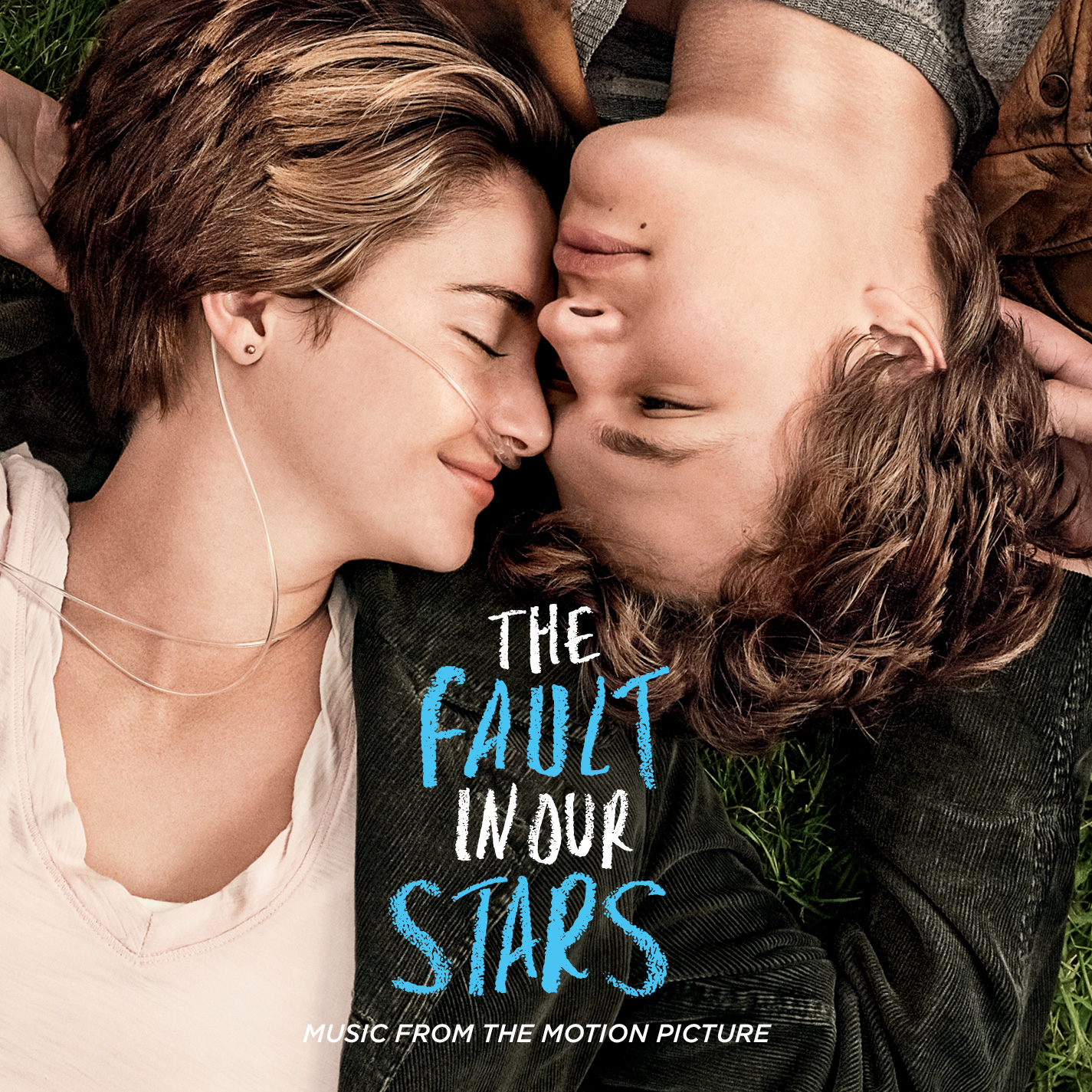
The two leading characters meet in a support group one day, that they have both been involuntarily brought to, and their story begins.  The novel is filled with laugh-out-loud humor which, though it is often aimed at cancer, is never insensitive or callous.  This I had not expected, I went into this book thinking I'd be crying the whole time, but it is not until the end, after you are fully engrossed in the lives and love of these two individuals, that you are brought to tears.

The book is filled with too many quotes to possibly try and include in this blog post, all of which are unforgettable, and make me dream that someday I could be as brilliant of a writer as John Green.  The Fault in Our Stars was also recently made into a major motion picture, it comes out in a few months and I cannot wait to relive the story again on the screen.


Wednesday, August 20, 2014

The Warmth of Other Suns

Isabel Wilkerson

"The story of the Great Migration is among the most dramatic and compelling in all the chapters of American history- So far reaching are its effects even now that we scarcely understand its meaning" (as cited by Wilkerson, 2010, p. 10).

The Great Migration was a term I had never heard before until I read this book, and I am a little ashamed to say that.  There are many other details of the history of black America, that I had never known before I opened this book.  Though that is partly my fault, I also think it is the fault of our Education System which failed to convey this side of our country's history.  This, too, is one of the long lasting effects of the Great Migration.

The Warmth of Other Suns is not on Amazon's list (I promise my next one will be- I've already started it) but it was as life changing as it was informative.  For the start of the school year, my employer had required all of us to read one of three books to help us better teach the minority youth in our classrooms.  By chance I picked this book because it happened to be the only one that the Denver Public Library actually carried... and it ended up being a great choice.

The Warmth of Other Suns follows the stories of three migrants from the Jim Crow South to the "free" North.  They traveled from Monroe, Louisiana to Los Angeles, California from Chickasaw County, Mississippi to Chicago, Illinois and from Eustis, Florida to New York City, New York.  It interweaves these stories with the history of the movement all the way from 1910 to present day.  It reads like a work of fiction, and at times the horrors within are so unbelievable and heartbreaking that you wish it was, but it is in fact nonfiction.  All of these people were seeking, as Richard Wright stated, "the warmth of other suns" (as cited by Wilkerson, 2010, p. 13).

The book is stirring, emotional, and informative.  It is a commitment- 622 pages- but it is so captivating that I plowed through it in five days.  The book ends with a powerful statement about the brave souls who left their lives and family behind to seek opportunity: "They did not ask to be accepted but declared themselves the Americans that perhaps few others recognized but that they had always been deep within their hearts" (Wilkerson, 2010, p. 538).  Wilkerson is an evocative and vivid writer who's book will leave you with a different view of the America you know today.  I recommend buying a copy, or checking one out from your local library, today.

Thursday, August 7, 2014

The Wild Horse Way

The Soul of a Horse

by Joe Camp

Ok.. In case it isn't immediately obvious, no this book is not on Amazon's Top 100 Books to Read in a Lifetime.  As an avid reader, I found it quite difficult to stick just to that list when there are so many amazing novels coming out every day that I would also like to read.  So I made a new deal with myself:  For every book off the list I read, I can read one book that is not on the list.  Thus, came Joe Camp.

Camp is the writer, director, and producer of the Benji movies.  One day, Camp and his wife Kathleen decide to delve into the world of horses which.. is not for the naive of mind or heart.  As Ralph Waldo  Emerson once aptly stated, "Riding a horse is not a gently hobby, to be picked up and laid down like a game of solitaire.  It is a grand passion.  It seizes a person and once it has done so, he will have to accept that his life will be radically changed."  I can only assume, that Camp and his wife had not heard of this quote when they decided to purchase three horses with no prior experience whatsoever.

Again, in case it isn't immediately apparent, this book appeals to a very select group of people: horse lovers.  Horses have been a part of my life since I was seven years old, and much to the chagrin of my parents, who paid for it my whole youth, it will always be a huge part of my life.  I recently bought a new horse named Coco Chanel, who is quickly proving to be the most wonderful animal I have ever encountered. 
Camp beautifully captures the world of horses in his account.  It is filled with anecdotes about those things that horses do every day that humans will simply never understand.  He also is extremely enthusiastic about the natural horse approach. This method of horse training is based on the idea that humans have put horses in conditions that are convenient for humans but not actually good for the animal.  It embodies the ideal that horses are healthiest and happiest when living outside, with no shoes on their feet, in a large space, with other horses to create a "herd" environment.  He also emphasizes this idea of "join-up" in which humans bond with their horse, and become their leader, so the horse wants to work with them rather than be forced to do so.  He gets a little preachy on this topic, and I'll admit I took a bit of a hiatus from the book because it was too much for me.  I understood his point, and valued it, but there was a part that felt like I was being lectured.

Camp brings the story back around though, and ends with a picturesque scene of happy horses and a happy family.  Over all, it was a delightful read about what life is like with horses.  If you have horses, have had horses, or might ever have horses, I definitely recommend giving this a read.